



Calcium Channel
Ca2+ channels; Ca channels
Calcium channel is an ion channel which displays selective permeability to calcium ions. It is sometimes synonymous as voltage-dependent calcium channel, although there are also ligand-gated calcium channels. Voltage-gated calcium (CaV) channels catalyse rapid, highly selective influx of Ca2+ into cells despite a 70-fold higher extracellular concentration of Na+. Some calcium channel blockers have the added benefit of slowing your heart rate, which can further reduce blood pressure, relieve chest pain (angina) and control an irregular heartbeat.
Calcium Channel Isoform Specific Products
All Product Categories
-
Calcium Channel Inhibitors
(583)
View all products
-
Calcium Channel Agonists
(35)
View all products
-
Calcium Channel Antagonists
(210)
View all products
-
Calcium Channel Activators
(86)
View all products
-
Calcium Channel Modulators
(45)
View all products
-
Calcium Channel Chemical
(1)
View all products
-
Calcium Channel Inducers
(11)
View all products
-
Calcium Channel Controls
(10)
View all products
-
Calcium Channel Ligands
(7)
View all products
-
Calcium Channel Related Products (1224)
Related Products (1224)

-
Antibodies (29)
-
Related Compound Screening Libraries (1)
-
Calcium Channel Isoform Comparison
-
Didrovaltrate
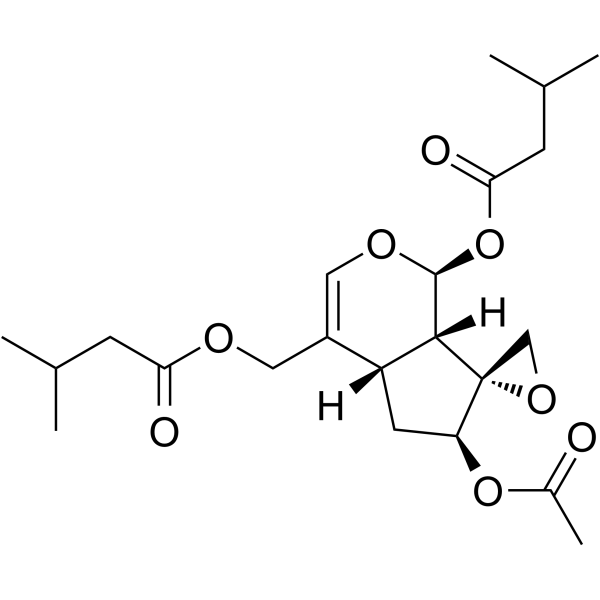 0 ImagesCat. No.: HY-N3741CAS No.: 18296-45-2Synonyms: DidrovaltratumDidrovaltrate (Didrovaltratum) is an L-type calcium channel blocker, ROS scavenger, autophagy enhancer, and lipid accumulation inhibitor. Didrovaltrate blocks L-type calcium currents in a concentration-dependent manner, shifts the current-voltage curve upward, modulates steady-state inactivation kinetics, and inhibits the nuclear translocation of glucocorticoid receptors. Didrovaltrate reduces ROS levels, downregulates the expression of muscle atrophy-related genes, enhances autophagy via lipophagy, and decreases Oleic acid-induced lipid accumulation. Didrovaltrate exhibits cytotoxic activity against cancer cells. Didrovaltrate can be used in research related to skeletal muscle atrophy, non-alcoholic fatty liver disease, breast cancer, lung cancer, gastric cancer, and prostate cancer.
-
Amlodipine-d4 maleate
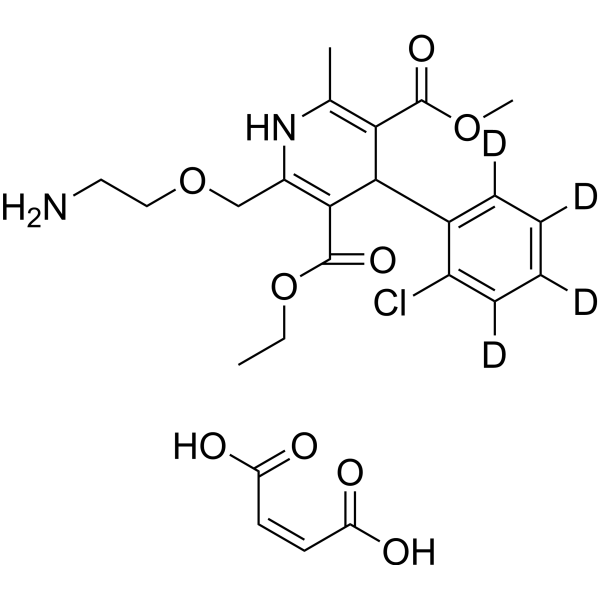 0 ImagesCat. No.: HY-B0317ASCAS No.: 2714486-25-4Amlodipine-d4 (maleate) is the deuterium labeled Amlodipine maleate. Amlodipine maleate is a dihydropyridine calcium channel blocker, acts as an orally active antianginal agent. Amlodipine maleate blocks the voltage-dependent L-type calcium channels, thereby inhibiting the initial influx of calcium. Amlodipine maleate can be used for the research of high blood pressure and cancer.
-
L-Phenylalanine-d7
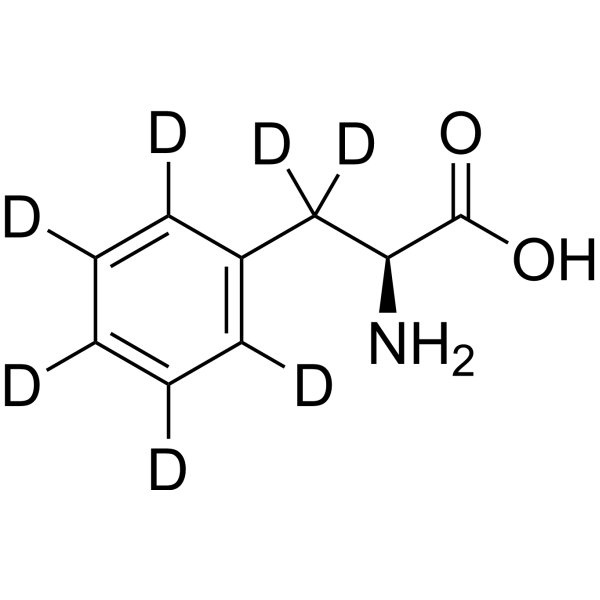 0 ImagesSynonyms: (S)-2-Amino-3-phenylpropionic acid-d7L-Phenylalanine-d7 is the deuterium labeled L-Phenylalanine. L-Phenylalanine ((S)-2-Amino-3-phenylpropionic acid) is an essential amino acid isolated from Escherichia coli. L-Phenylalanine is a α2δ subunit of voltage-dependent Ca+ channels antagonist with a Ki of 980 nM. L-phenylalanine is a competitive antagonist for the glycine- and glutamate-binding sites of N-methyl-D-aspartate receptors (NMDARs) (KB of 573 μM ) and non-NMDARs, respectively. L-Phenylalanine is widely used in the production of food flavors and pharmaceuticals.
-
Cronidipine
 0 ImagesSynonyms: LF2-0254Cronidipine (LF2-0254) is a Calcium Channel blocker. Cronidipine can be used in cardiovascular disease related research.
-
YS-201
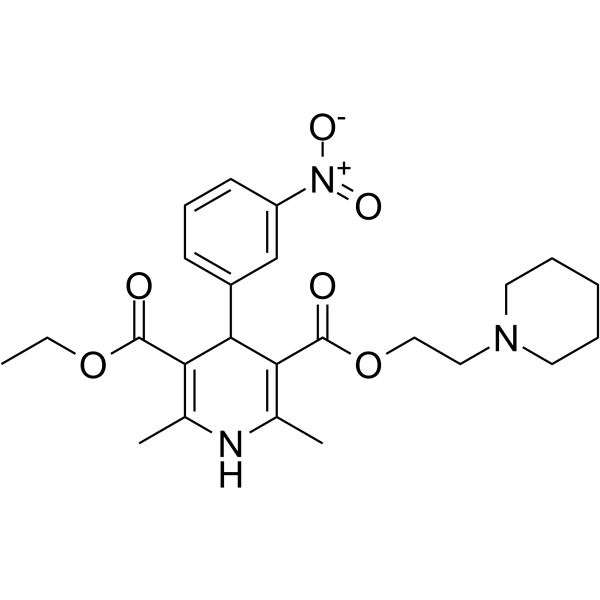 0 ImagesYS-201 is a dihydropyridine-type calcium channel antagonist. YS-201 has the potential for angina pectoris and hypertension treatment.
-
Mibefradil
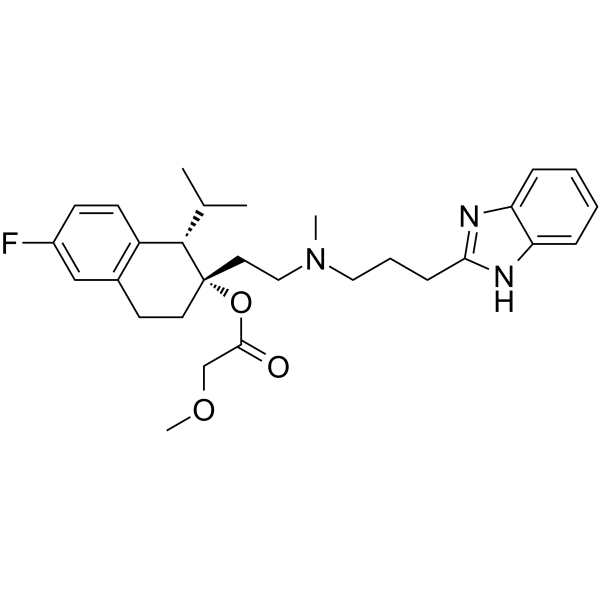 0 ImagesCat. No.: HY-15553CAS No.: 116644-53-2Synonyms: Ro 40-5967Mibefradil (Ro 40-5967) is a calcium channel blocker with moderate selectivity for T-type Ca2+ channels displaying IC50s of 2.7 μM and 18.6 μM for T-type and L-type currents, respectively.
-
Nicardipine hydrochloride (Standard)
 0 ImagesSynonyms: YC-93 (Standard)Nicardipine (hydrochloride) (Standard) is the analytical standard of Nicardipine (hydrochloride). This product is intended for research and analytical applications. Nicardipine hydrochloride (YC-93) is a calcium channel blocker with an IC50 of 1 μM for blocking cardiac calcium channels. Nicardipine hydrochloride acts as an agent for chronic stable angina and for controlling blood pressure.
-
Nisoldipine (Standard)
 0 ImagesSynonyms: BAY-k 5552 (Standard)Nisoldipine (Standard) is the analytical standard of Nisoldipine. This product is intended for research and analytical applications. Nisoldipine (BAY-k 5552; Sular) is a highly efficient and specific L-type Cav1.2 channel blocker with an IC50 of 10 nM.
-
PD0176078
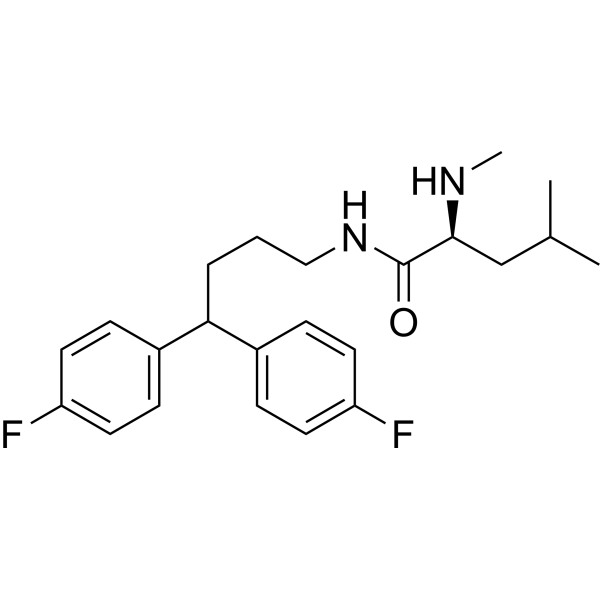 0 ImagesPD0176078 is a newly found N-type Calcium channel blocker.
-
Lemildipine
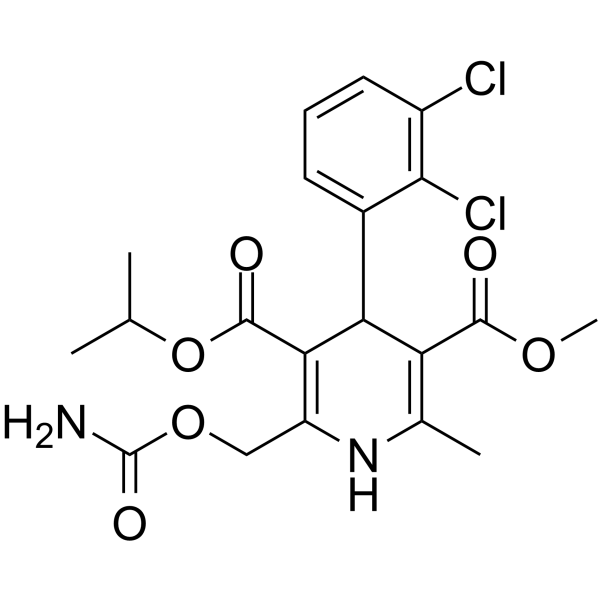 0 ImagesSynonyms: NB-818; NPK-1886Lemildipine is a new dihydropyridine calcium entry blocker.
-
D-myo-Inositol 1,4,5-trisphosphate tripotassium
 0 ImagesSynonyms: Inositol 1,4,5-trisphosphate tripotassium; Ins(1,4,5)-P3 tripotassiumD-myo-Inositol 1,4,5-trisphosphate tripotassium, a second messenger, elicits Ca2+ mobilization. D-myo-Inositol 1,4,5-trisphosphate tripotassium inhibits the binding of phosphoinositide-specific phospholipase C-delta 1 (PLC-delta 1) to bilayer membranes composed of phosphatidylcholine (PC) and phosphatidylinositol 4,5-bisphosphate (PIP2).
-
Topiramate-13C6
 0 ImagesCat. No.: HY-B0122SSynonyms: McN 4853-13C6; RWJ 17021-13C6Topiramate-13C6 (McN 4853-13C6) is the 13C labeled isotope of Topiramate (HY-B0122). Topiramate (McN 4853) is a broad-spectrum antiepileptic agent. Topiramate is a GluR5 receptor antagonist. Topiramate produces its antiepileptic effects through enhancement of GABAergic activity, inhibition of kainate/AMPA receptors, inhibition of voltage-sensitive sodium and calcium channels, increases in potassium conductance, and inhibition of carbonic anhydrase.
-
Lercanidipine-d3 hydrochloride
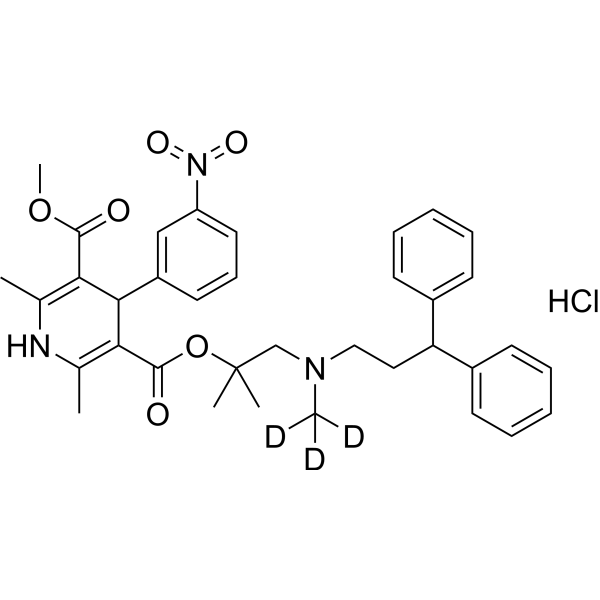 0 ImagesLercanidipine-d3 (hydrochloride) is the deuterium labeled Lercanidipine. Lercanidipine is a lipophilic third-generation dihydropyridine-calcium channel blocker (DHP-CCB). Lercanidipine has long lasting antihypertensive action and reno-protective effect.
-
Halofuginone (Standard)
 0 ImagesSynonyms: RU-19110 (Standard)Halofuginone (Standard) (RU-19110 (Standard)) is the analytical standard of Halofuginone (HY-N1584). This product is intended for research and analytical applications. Halofuginone (RU-19110), a Febrifugine derivative, is a competitive prolyl-tRNA synthetase inhibitor with a Ki of 18.3 nM. Halofuginone is a specific inhibitor of type-I collagen synthesis and attenuates osteoarthritis (OA) by inhibition of TGF-β activity. Halofuginone is also a potent pulmonary vasodilator by activating Kv channels and blocking voltage-gated, receptor-operated and store-operated Ca2+ channels. Halofuginone has anti-malaria, anti-inflammatory, anti-cancer, anti-fibrosis effects.
-
Calcium Channel antagonist 2
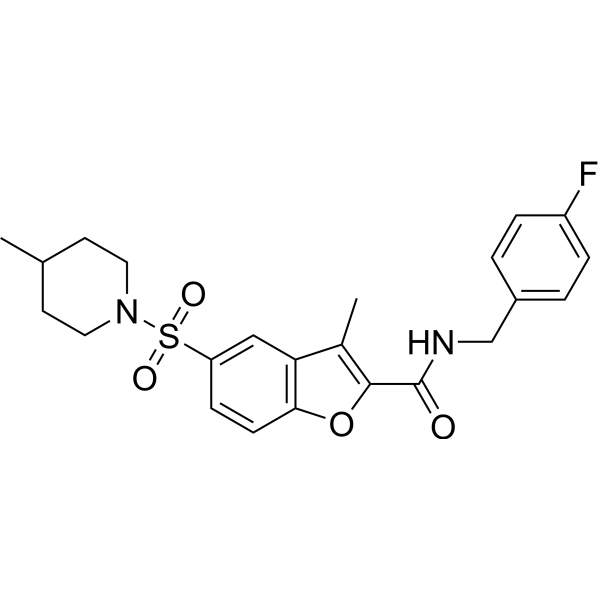 0 ImagesCalcium Channel antagonist 2 (Compound 154) is a calcium channel antagonist (IC50=5-20 μM). Calcium Channel antagonist 2 can be used in study of calcium channel-mediated diseases such as pain and diabetes.
-
Taurolithocholic acid sodium salt (Standard)
 0 ImagesTaurolithocholic acid (sodium salt) (Standard) is the analytical standard of Taurolithocholic acid (sodium salt). This product is intended for research and analytical applications. Taurolithocholic acid sodium salt is an orally active bile acid and antiviral agent. Taurolithocholic acid sodium salt upregulates FADS2 by activating the TGR5-PI3K/AKT-SREBP2 signaling axis, inhibits SFTSV-induced ferroptosis, viral replication and viral entry of HBV/HDV, while reducing the release of IL-1β, lipid ROS and LDH. While exerting antiviral protective effects, Taurolithocholic acid sodium salt also stimulates the recycling of hepatocellular membrane transporters, impairs canalicular bile acid secretion function, and induces hepatocyte cholestasis, apoptosis and acute hepatocellular injury. Taurolithocholic acid sodium salt serves as an experimental model compound for hepatocellular cholestasis. At concentrations ≤200 μM, Taurolithocholic acid sodium salt shows no cytotoxicity and does not activate the interferon pathway. Taurolithocholic acid sodium salt not only protects mice from lethal SFTSV infection but also is suitable for studies related to severe fever with thrombocytopenia syndrome and cholestasis.
-
Bupivacaine liposome
 0 ImagesCat. No.: HY-185388Synonyms: Liposomal bupivacaineBupivacaine liposome is a liposome-encapsulated form of Bupivacaine (HY-B0405). Bupivacaine is an NMDA receptor inhibitor. During the action potential, Bupivacaine blocks sodium channels, thereby inhibiting the generation and conduction of nerve impulses induced by painful stimuli. Bupivacaine liposome reduces the release rate of Bupivacaine, thus achieving a long-lasting pain relief effect.
-
Cavα2δ-IN-1
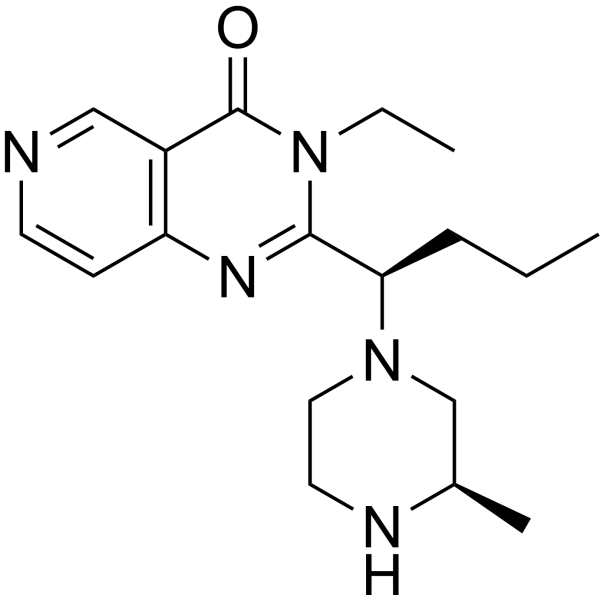 0 ImagesCat. No.: HY-132932CAS No.: 2416957-09-8Cavα2δ-IN-1 shows high selectivity for voltage-gated calcium channels Cavα2δ-1 (Ki 6 nM) versus Cavα2δ-2 (Ki > 10000 nM).
-
Minocycline-d7
 0 ImagesCat. No.: HY-W654013Minocycline-d7 is deuterium labeled Minocycline. Minocycline is an orally active, potent and BBB-penetrated semi-synthetic tetracycline antibiotic. Minocycline is a hypoxia-inducible factor (HIF)-1α inhibitor. Minocycline shows anti-cancer, anti-inflammatory, and glutamate antagonist effects. Minocycline reduces glutamate neurotransmission and shows neuroprotective properties and antidepressant effects. Minocycline inhibits bacterial protein synthesis through binding with the 30S subunit of the bacterial ribosome, resulting in a bacteriostatic effect.
-
Mirogabalin besylate (Standard)
 0 ImagesCat. No.: HY-108006RCAS No.: 1138245-21-2Synonyms: DS 5565 besylate (Standard)Mirogabalin besylate (Standard) is the analytical standard of Mirogabalin besylate (HY-108006). This product is intended for research and analytical applications. Mirogabalin besylate is a selective and orally available ligand for the α2δ subunit of voltage-gated calcium channels, with Kds of 13.5 nM, 22.7 nM, 27 nM, and 47.6 nM for human α2δ-1, human α2δ-2, rat α2δ-1, and rat α2δ-2, respectively.




